

 Business License

What Can the RFSoC 47DR Digital Array Board Do?
What Can the RFSoC 47DR Digital Array Board Do? ( wechat ID :189 0928 0682 )
The ZXB-47DR series from Xi'an Sinewave Measurement and Control Technology (based on the Xilinx ZU47DR RFSoC) is essentially a "Direct RF Sampling + Real-time Processing" hardware verification platform. Its core value lies in eliminating the complex analog frequency conversion circuits of traditional systems, allowing signals to be processed directly in the digital domain. This makes it exceptionally well-suited for applications requiring extremely high bandwidth and real-time performance.
🛠️ Four Core Categories of Tasks It Can Handle
1. Radar & Sensing Systems (Digital Array/Phased Array)
This is its primary domain. Leveraging the multi-channel advantages of 4T4R or 8T8R, combined with the powerful onboard FPGA fabric, it can directly implement:
Digital Beamforming (DBF): Electronically steer the beam by algorithmically controlling the phase of multiple antenna channels, eliminating the need for mechanical rotation.
4D Imaging Radar Prototyping: Process multi-channel echo data from millimeter-wave radar for point cloud generation and target tracking algorithm verification.
Signal Processing Chain: Execute core radar algorithms like pulse compression, Moving Target Detection (MTD), and Constant False Alarm Rate (CFAR) processing.
2. Wireless Communication R&D (5G/6G & MIMO)
Thanks to its DC-6GHz direct sampling bandwidth and high sample rates, it is a powerful tool for communication algorithm verification:
Massive MIMO Prototype: Build small-scale 4x4 or 8x8 MIMO systems to validate spatial multiplexing and precoding algorithms.
5G NR / 6G Research: Directly sample wideband signals and implement Physical Layer (PHY) baseband processing (e.g., OFDM modulation/demodulation, LDPC channel coding) on the FPGA.
Satellite Communication Baseband: Process wideband signals for satellite-terrestrial links.
3. Electronic Warfare (ECM) & Signal Intelligence
Signal Reconnaissance & Sorting: Capture frequency-hopping or spread-spectrum signals in complex electromagnetic environments using the high-speed ADC, enabling parameter measurement and signal sorting.
Jamming Signal Generation: Real-time generation of smart noise or deceptive jamming waveforms via the DAC for testing electronic attack strategies.
4. High-End Test & Measurement / Scientific Research
Wideband Signal Recording & Playback: Paired with the onboard 100G optical port and DDR4 memory, it can act as a "digital tape recorder," capturing (streaming to disk) and precisely replaying wideband RF signals for fault replication.
Algorithm Education: Commonly used in university labs for teaching Digital Signal Processing (DSP), Software-Defined Radio (SDR), and array signal processing.
⚙️ The Hardware Foundation Enabling These Capabilities
Capability | Hardware Support | Key Advantage |
|---|---|---|
Direct RF Sampling | 14-bit ADC (5 GSPS) / DAC (9.85 GSPS) | Eliminates mixers/LOs, simplifies RF front-end, reduces system noise and distortion. |
Multi-channel Synchronization | 4T4R or 8T8R architecture, supports board-level cascading. | Enables prototyping of larger antenna arrays, ensures phase coherence between channels. |
Real-time Processing | ARM A53/R5 cores + extensive FPGA fabric. | Parallel acceleration of operations (e.g., FFT, filtering) in hardware with extremely low latency. |
High-throughput Data Handling | 100G QSFP28 optical port + onboard DDR4. | Solves the bottleneck of handling ("storing and moving") massive wideband signal data. |
💡 Selection and Usage Advice
If you are building a radar/communication prototype: It is an excellent proof-of-concept platform, significantly shortening the development cycle from algorithm simulation to hardware verification.
If you are moving to mass production: It typically serves as a development/evaluation board. For production, functionality can be scaled down using cheaper chips or custom carrier boards based on specific needs.
Important Note: Its performance is highly dependent on your FPGA programming skills (Vivado/Vitis). Programming only on the ARM side (software) cannot leverage the full power of its direct RF sampling capabilities
Recently Posted
-
SIN-AJ-001 GNSS Anti-Jamming Module supports mission-critical operations by providing interference-f
April 17, 2026he core function of the Anti-Jamming Module (e.g., SIN-AJ-001) is to act as a "signal purifier" for satellite navigation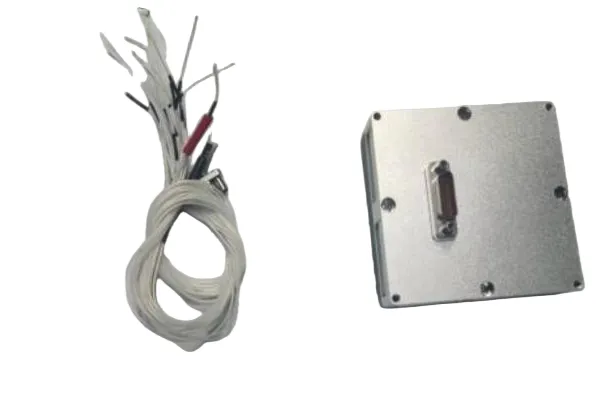 Read More
 -
Rfsoc 47dr-8t8r Verification Evaluation Board
April 17, 2026The ZXB-27DR-8T8R mixed signal processing card adopts Xilinx ZYNQ UltraScale+RFSoCZU27DR, which can access large FPGA gate density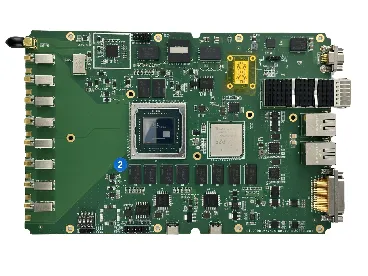 Read More

Contact Us
Recommended Products


-
 Starting Generator Mounting Equipment Y12E-6460-0 ForY-12NegotiableMOQ: 1 Piece
 -
Starting Generator Y12E-6460-0 ForY-12NegotiableMOQ: 1 Piece
-
Fire Detector Y12E-6460-50 ForY-12NegotiableMOQ: 1 Piece
-
Tachometer Generator Y11T-6440-0 ForY-12NegotiableMOQ: 1 Piece
-
Shock Absorber Y12E-6400-10 ForY-12NegotiableMOQ: 1 Piece

